Lawn Care Bettendorf: Do This First for a Thicker, Greener Spring Lawn
Lawn Care Bettendorf: Do This First for a Thicker, Greener Spring Lawn
I'm Luke from Boscage Landscaping, and every March I get a wave of calls from homeowners across the Quad Cities asking the same thing: "When do I start?" I came across a solid video recently from The Lawn Review that covers early spring lawn care in a way I really liked — practical, no fluff. Worth watching. But here in Bettendorf and the surrounding area, our clay soils and unpredictable Iowa spring weather add a few wrinkles to the standard advice. So I'm going to walk through the checklist, share the video, and tell you what I've learned from working on lawns out here for over 11 years.
Video and screenshots are used for commentary and educational purposes. The Lawn Review is not affiliated with or endorsing Boscage Landscaping.
What Makes Early Spring Different Here in the Quad Cities
A lot of lawn content online assumes you're somewhere warm, or at least somewhere with a predictable spring. That's not Bettendorf. We get freeze-thaw cycles through March that compact soil, heave roots, and leave lawns looking rough even after the snow clears. The Mississippi River valley also holds moisture differently than most areas — drainage is a real issue for a lot of properties in Bettendorf, LeClaire, and Pleasant Valley. That affects everything from when you apply pre-emergent to how your soil actually responds to fertilizer.
After working with over 500 active clients in this area, I've noticed that most spring lawn problems trace back to one thing: people either waited too long or moved too fast. The goal of this checklist is to help you pace it right — so you're setting your lawn up instead of playing catch-up by May.
Step 1: Grab a Lawn Calendar and Actually Use It
This sounds almost too simple, but it makes a real difference. Before you buy anything or put anything down, map out the next 30, 60, and 90 days for your lawn. Know what products you'll need, roughly when you'll need them, and what your grass type requires. Cool-season grasses like Kentucky bluegrass and fescue — which are common throughout Bettendorf and Davenport — have a very different spring schedule than warm-season varieties.
The practical reason to do this early: pre-emergent and quality fertilizer sell out fast in spring. I've heard from customers who waited until early April looking for crabgrass preventer and couldn't find it on shelves anywhere. Stock up a few weeks before you need it, not the weekend you plan to apply it.
Step 2: Pre-Emergent Timing — Wait for Soil Temp, Not the Calendar
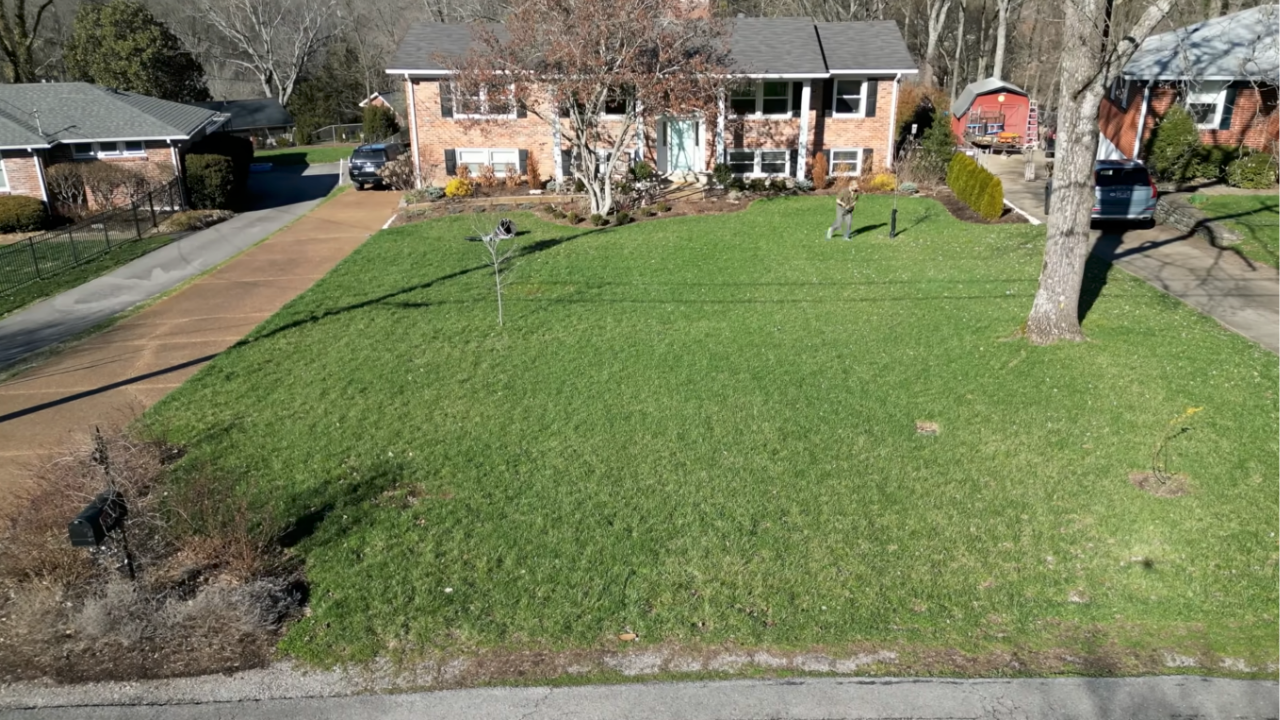
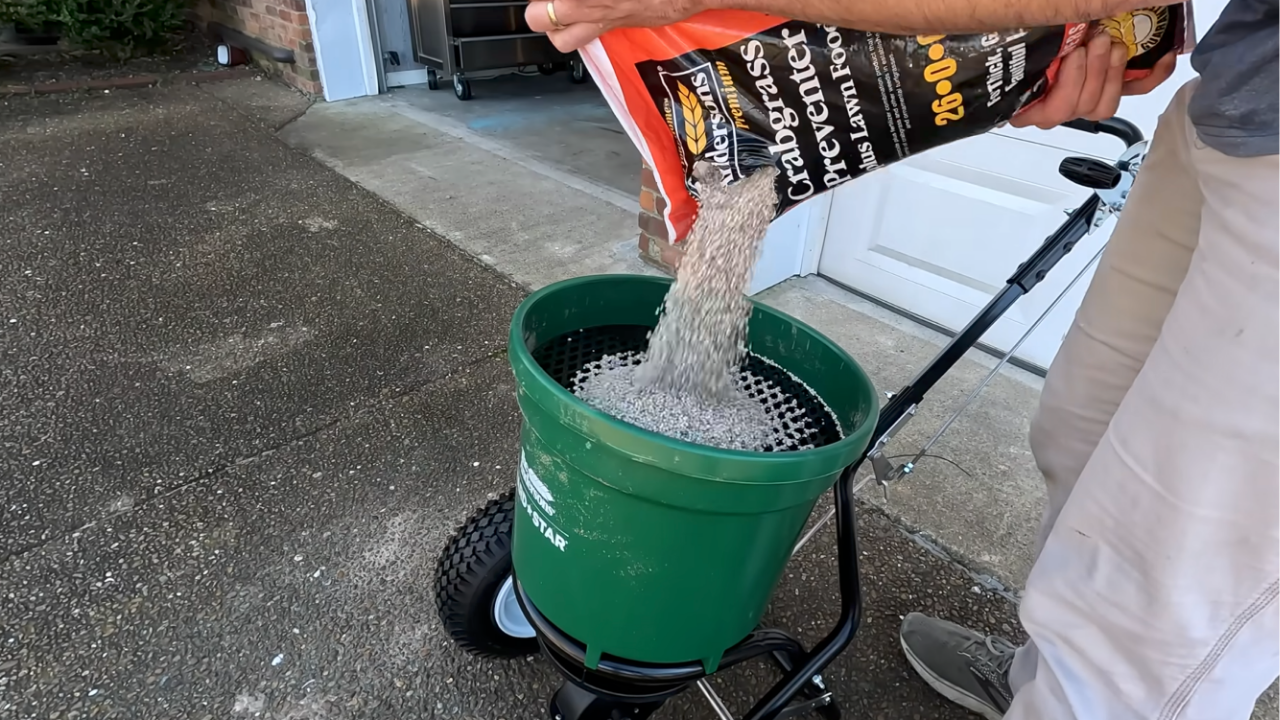
Pre-emergent is the single most important application of the early spring season. It creates a barrier in the soil that stops weed seeds — crabgrass especially — from germinating before they ever become visible. But here's where a lot of homeowners in Bettendorf go wrong: they go by the date instead of the soil temperature.
Weed seeds start germinating around 55°F soil temperature. Your goal is to get pre-emergent down just before that happens, when soil temps are hovering around 50 to 51°F. In our area, that window often lands somewhere between mid-March and early April depending on the year. Some springs it's sooner. A late cold snap can push it back. Checking a local soil temperature resource or even a basic thermometer a few inches down takes the guesswork out of it.
Apply too early and the product breaks down before weeds even try to germinate. Apply too late and those seeds are already in motion. Either way, you're behind. Timing it right means you spend far less time fighting weeds in June and July.
Step 3: Soil Testing — One Test That Changes Everything
I know soil testing sounds like something for farmers or serious hobbyists, but honestly it's one of the most useful things a homeowner can do — especially here in the Quad Cities where clay soil is the norm. Clay holds onto moisture and nutrients differently than sandy or loam soil, and pH problems are common. If your soil pH is way off, fertilizer won't absorb the way it should. You can spend money on great products and still get mediocre results because the soil environment isn't right.
You don't need to obsess over every number on the report. Focus on pH. A healthy lawn likes a pH somewhere between 6.0 and 7.0. If your result comes back well below that — say in the low 4s — lime application is the fix. It's not exciting work, but getting that corrected early gives everything else you do this season a real chance to work. University extension offices and local co-ops often offer affordable soil testing, and it's worth doing at least once every few years.
Step 4: Overseed and Feed Thin Spots Early
If your lawn came out of winter looking patchy or thin, spring is the time to address it — not June when it's hot and competition from weeds is already heavy. Overseeding thin areas in early spring gives new grass time to establish before summer stress sets in.
A few things worth knowing here. First, you generally cannot apply pre-emergent and overseed at the same time. Pre-emergent stops all seeds from germinating — including grass seed. So if you're overseeding thin spots, do that first or plan those areas separately from your pre-emergent application. Second, a light fertilizer application at this stage helps give that new seed something to work with. Nothing heavy, just enough nitrogen to support early growth without pushing the lawn faster than it wants to go. Water it in and give it time.
Step 5: Check Irrigation Before You Actually Need It
This one gets skipped more often than it should. After hard freezes, sprinkler valves can crack without you ever noticing. You won't know until mid-summer when a zone starts pooling water or you have a dry brown patch nobody can explain.
Early spring, before things get busy, turn each zone on and let it run for a few minutes. Walk the lines and look for obvious pooling or sprinkler heads that aren't functioning right. In LeClaire and parts of Bettendorf that sit closer to the river, ground movement from freeze-thaw cycles can shift lines slightly and affect coverage. Catching it now means you can get it fixed before the schedule fills up.
What I See Go Wrong Every Single Spring
After 11 years on lawns in Bettendorf, Davenport, Moline, and the surrounding area, there are patterns that repeat themselves season after season. Here are the most common ones.
Going by the date instead of conditions.March 15th doesn't automatically mean it's time for pre-emergent. Some years it is. Some years the soil is still too cold and you'd be wasting product. Watch the soil temperature, not the calendar.
Overseeding at the same time as pre-emergent.I've seen this happen a lot. Homeowners buy both products, apply them the same weekend, and then wonder why the grass seed never took. Pre-emergent stops all seeds. You can't do both at the same time in the same area.
Skipping the soil test and blaming the fertilizer.If pH is the problem, no amount of fertilizer fixes it. I've talked to homeowners who have been fertilizing the same struggling lawn for years without knowing the soil pH was the root issue. One test would have pointed them in the right direction years earlier.
Waiting to call until they already have a weed problem.Prevention is always easier than treatment. Once crabgrass is up and visible, the pre-emergent window is gone. At that point you're managing damage, not preventing it.
Your Early Spring Lawn Care Checklist for the Quad Cities
Map out your product schedule for the next 30, 60, and 90 days — stock up before shelves clear out
Monitor soil temperature and apply pre-emergent around 50–51°F, before it hits 55°F
Do a soil test and address any major pH problems with lime if needed
Overseed thin or bare spots early — separately from your pre-emergent application
Apply a light balanced fertilizer when grass is actively showing green growth
Run irrigation zones and check for cracked valves or uneven coverage now, before peak season
For warm-season grasses: bring mowing height down gradually as the lawn wakes up, not all at once
Ready to Skip the Guesswork? Let's Talk.
Spring is a short window in Bettendorf, and once it closes, you're managing whatever decisions were made — or not made — in those early weeks. If you'd rather hand this off to a team that knows these lawns and knows this area, we'd be glad to help.
At Boscage Landscaping, we've been serving homeowners across Bettendorf, LeClaire, Davenport, Moline, and Pleasant Valley since 2014. We carry a 4.8-star rating with over 500 active clients and an 80% retention rate. Our team is fully insured, background checked, and local — we've grown up in this community and we're invested in keeping it looking great.
Reach out today and we'll get back to you fast. Same day whenever possible.
Call or text:(563) 209-4636
Request an estimate:boscagelandscaping.com/estimate-request
Serving:Bettendorf, LeClaire, Davenport, Moline, Pleasant Valley, and the surrounding Quad Cities area